
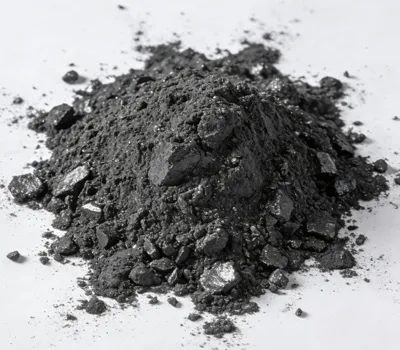
Boron Carbide
Boron Carbide (B₄C) is an ultra-hard ceramic material known for its exceptional hardness, low density, and outstanding wear resistance. It offers excellent performance in abrasive and high-stress environments, making it suitable for demanding industrial, defense, and precision engineering applications.
Key Advantages
- Exceptional Hardness: Mohs hardness >9.3, ranking among the hardest known materials, second only to CBN and diamond.
- Very Low Density: Lighter than aluminum, ideal for weight-critical applications like armor.
- Excellent Neutron Absorption Capability: High neutron absorption cross-section for thermal neutrons.
Disadvantages
- Extreme Brittleness: Very low fracture toughness, prone to chipping and fracture.
- Difficult to Sinter to High Density: Typically requires hot pressing, which is expensive and limits the size of components that can be produced.
- Moderate Thermal Shock Resistance: Although the melting point is high, thermal conductivity decreases at elevated temperatures, making it inferior to SiC in thermal shock resistance.
Primary Applications
- Ballistic Armor: Lightweight body armor, helicopter seats, and armor plates for vehicles.
- Wear-Resistant Components: Sandblasting nozzles, mechanical seal rings, grinding media.
- Nuclear Industry: Control rods, neutron absorbers in nuclear reactors.
- Abrasives: For grinding and polishing hard materials like tungsten carbide and gemstones.