
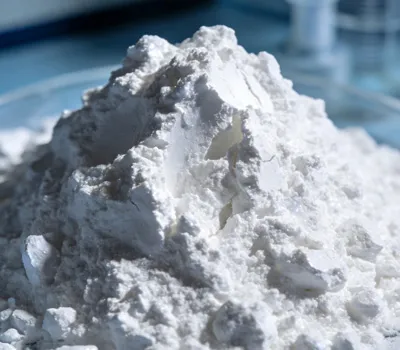
Zirconium Oxide
Zirconium Oxide (ZrO₂) is a high-performance ceramic recognized for its exceptional toughness, high fracture resistance, and thermal insulation properties. Its ability to resist crack propagation and perform reliably under mechanical stress makes it ideal for demanding structural, industrial, and precision applications.
Key Advantages
- Extremely High Fracture Toughness & Strength: Achieved through transformation toughening; its toughness can be more than 5 times that of alumina, with high flexural strength.
- Exceptional Wear Resistance: The combination of high toughness and hardness results in superior wear and impact resistance compared to most other ceramics.
- Low Thermal Conductivity: A good thermal insulator.
- Excellent Biocompatibility: Non-toxic and highly compatible with human tissue.
- Low Friction Coefficient: Exhibits self-lubricating characteristics in certain applications.
Disadvantages
- The cost is higher than Alumina.
- Limited High-Temperature Perform ance: Long-term use above 1100℃ can lead to phase transformation and degradation, causing a drop in strength and toughness; not suitable for ultra-high-temperature load-bearing applications.
- Impact resistance is still inferior to metals.
Primary Applications
- Structural Ceramics: Ceramic knives, watch cases, smartphone backplates (5G antenna windows).
- Biomedical: Dental restorations (crowns, implants), femoral heads for hip replacements.
- Wear & Corrosion-Resistance Parts: Pump shafts, valve components, textile guides.
- Sensors: Oxygen Sensors (utilizing its ionic conductivity).