
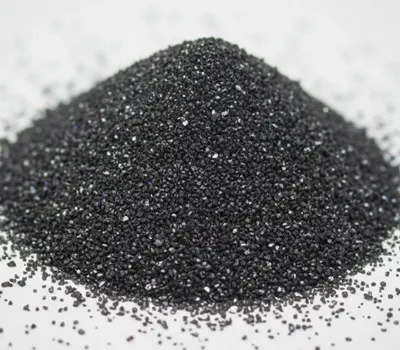
Silicon Carbide
Silicon Carbide (SiC) is a high-performance ceramic widely used in demanding industrial and semiconductor applications. Known for its extreme hardness, thermal stability, and chemical resistance, SiC delivers long-lasting reliability in harsh operating environments.
Key Advantages
- Exceptional Hardness & Wear Resistance: With a Mohs hardness of 9.2–9.5, SiC is one of the hardest industrial materials available—surpassed only by diamond and cubic boron nitride.
- Superior High-Temperature Mechanical Strength: SiC maintains high strength and stiffness at temperatures up to 1600°C, offering excellent thermal creep resistance for extreme heat applications.
- Excellent Thermal Conductivity: Its high thermal conductivity makes SiC an ideal choice for advanced thermal management, heat dissipation, and high-power device platforms.
- Outstanding Chemical Stability: SiC resists corrosion from acids, alkalis, and oxidation, ensuring long-term stability in chemically aggressive environments.
- Advanced Semiconductor Properties: As a wide-bandgap semiconductor, SiC enables high-temperature, high-frequency, and high-power electronics, making it essential to next-generation power devices.
Disadvantages
- High Brittleness: As with most ceramics, it has low impact toughness and is susceptible to brittle fracture.
- Difficult Machining: Its extreme hardness requires diamond tools for post-sintering processing, resulting in higher costs.
- High Cost: Premium, high-purity grades – especially those produced through reaction bonding or pressureless sintering – can be expensive.
Primary Applications
- Seals & Bearings: Mechanical seals and wear-resistant bearings for harsh operating environments.
- Refractories: Kiln furniture, setters, high-temperature furnace linings.
- Wear-resistance Components: Nozzles, liners, cyclones.
- Semiconductor Industry: Wafer processing boats, susceptors, etch chamber components.
- Power Electronics: As a wide-bandgap semiconductor for MOSFETs, diodes, etc. (Third-generation semiconductor).